



















Home/Blog/How agencies verify views
How Clipping Agencies Verify Views, and What They Reject
"Views" is not one number. Every platform counts it differently, and a claimed total quietly folds in bots, duplicates and flash impressions. A serious clipping agency reconciles all of that down to verified views, the ones that survive real checks, and throws the rest away. Here is exactly how it works, platform by platform, and what you should never pay for.
Key takeaways
- "Views" means different things on different platforms. A TikTok view and a LinkedIn view are not the same unit, so totals across platforms cannot be added up naively.
- Verification is mostly subtraction: strip bots, strip duplicates and self-views, and drop impressions that never met the platform's counted-view threshold.
- The honest starting point is the platform-reported number, reconciled against it, never a looser internal dashboard total that inflates upward from raw impressions.
- Recognised standards from the MRC and IAB, roughly 50% of the video on screen for two continuous seconds, exist so buyers are not trusting self-reported fiction.
- For a SaaS buyer the rule is simple: pay for verified views only, and treat any vendor that cannot explain what it rejects as reporting activity, not reach.
Why "views" is not one number
The word "view" hides a range of very different things, and that ambiguity is where inflated reporting lives.
One dashboard counts a view the instant a clip appears on screen. Another waits for a few seconds of watch time. Some totals quietly fold in the creator's own replays, page refreshes and outright bot traffic. So two agencies can both claim "ten million views" while meaning wildly different things, and only one of those numbers reflects real humans who actually watched. A verified view collapses that ambiguity into a single defensible definition: a real person, counted once, who watched long enough for the platform to count it. Everything else is noise, and reporting the noise as reach is how a weak campaign gets dressed up as a strong one. That is the whole reason our reporting is built on verified views rather than raw dashboard totals.
This matters even more across platforms. A campaign that runs on TikTok, LinkedIn and YouTube is counting views under three different rulebooks, so adding the three totals into one big headline is not just sloppy, it is misleading. Understanding the rulebook for each platform is the first real step in verification.
How each platform counts a view
Before you can verify a number you have to know what the platform itself counts. The threshold ranges from almost nothing to a proper viewability standard, and that range is exactly why some totals inflate so easily.
Counted-view threshold, loosest to strictest
Approximate, and platforms change their rules, so always confirm against current documentation. The point is the spread: a "view" on a loose platform is a far weaker signal than one on a platform that demands two seconds at 50% on screen.
Read that top to bottom and the inflation problem is obvious. On the loosest platforms a "view" can be a clip that flashed past in an autoplay feed and was never really watched, while the strictest platforms already demand something close to genuine attention. A credible agency treats these as different units, reconciles each against its own platform data, and never quietly blends a loose TikTok count into the same headline as a strict LinkedIn one.
What a verified view strips out
Whatever the platform threshold, verification is mostly subtraction. Three categories get removed from any claimed number before it can be called verified.
Reject 1
Bots & fake traffic
Automated or purchased views with no real human behind them. Flagged by traffic patterns and platform signals, then removed.
Reject 2
Duplicates & self-views
The same person counted twice, refreshes, and the creator's own replays. A verified view is a unique human, counted once.
Reject 3
Under the threshold
Impressions too short to count as real attention. If it did not meet the platform's watch-time bar, it is an impression, not a view.
Notice what all three have in common: they inflate the headline without adding a single real viewer. Stripping them is not conservative accounting, it is the difference between a number you can defend in a board meeting and one you cannot.
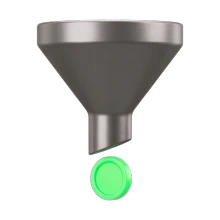
The verified-view filter
See it work. Start with a claimed view count, then apply the three checks and watch how much of the headline actually survives.
Big numbers are cheap. Verified ones are not. Anyone can claim millions of views. The question a serious buyer asks is how many survive the filter, because that is the only number tied to real reach.
The verified-view filter
Set a claimed view count and the rejection rates. The verified number is what is left after bots, duplicates and sub-threshold views are stripped.
Illustrative. Real rejection rates vary by source and platform, but the mechanic is exactly this: bots, duplicates and views under the platform's counted-view threshold are removed before a verified number is reported.
How reconciliation actually works
Verification is not the agency inventing its own number. It is a reconciliation: start from what the platform reports, then subtract what fails the checks.
The honest sequence runs downward, never upward. You begin with the platform-reported counted views, the figure the platform itself is willing to stand behind, pulled from platform analytics or an API rather than a screenshot. From there you remove flagged bot and fake traffic, collapse duplicates and self-views into single unique viewers, and drop anything that did not meet the watch-time threshold from the last section. What remains is the verified number, and by construction it is smaller than the platform total, never larger. That direction is the tell. Any report showing a number bigger than the platform's own counted views is measuring something the platform would not even call a view, which usually means raw impressions dressed up as reach. Pairing that reconciliation with honest attribution is what turns a view count into a business signal rather than a vanity metric.
The standards engines and buyers trust
None of this is invented agency jargon. There is an established measurement world that defines what a real, viewable view is, and it is the world serious buyers and search engines lean on.
The Media Rating Council and the IAB set the reference points, and for video the widely cited bar is roughly 50% of the player in view for two continuous seconds before an impression counts as viewable. Bodies like these exist precisely because the whole ad and media economy needs numbers that are audited rather than self-reported. Each platform's own help documentation then defines how it counts a view on top of that. An agency that grounds its verified-view definition in those standards, platform-reported counts reconciled against recognised viewability rules, is speaking the same language as the people who audit media for a living. One that cannot point to any of it is asking you to trust a dashboard, which is exactly the kind of unaccountable number that compliance-minded buyers have learned to discount.
What it means for a SaaS buyer
Strip away the measurement theory and the buyer's job comes down to a few concrete moves, plus a short list of warning signs.
- Pay on verified views only. That puts the cost of any inflation on the vendor, not you, and instantly aligns incentives.
- Ask what gets rejected. A credible partner can explain bots, duplicates and thresholds in one paragraph. Vagueness is the answer.
- Compare the verified number, never the claimed one. The claimed figure is free to inflate, so comparing vendors on it rewards the least honest.
- Watch for cross-platform blending. A single headline that silently adds loose TikTok views to strict LinkedIn views is hiding the mix on purpose.
- Distrust a number bigger than the platform total. If a report exceeds the platform's own counted views, it is raw impressions wearing a view's clothes.
Do those five things and a smaller verified figure from an honest partner beats a huge unverifiable one every time, because only the verified number maps to real people who might become pipeline. That is the standard our pricing is built around.
Where our AI and SaaS agency fits
We built the whole model around this one idea: you pay for verified views, and nothing else counts.
As a SaaS and AI clipping agency, every campaign we run reports verified views reconciled against platform data, with bots, duplicates and sub-threshold impressions stripped before you ever see a number, and each platform counted under its own rulebook rather than blended into one flattering total.
Verified views, not impressions
The numbers we publish are reconciled, not raw. For Wispr Flow we delivered 750M+ verified views in 30 days, LinkedIn-first; an official Adobe series reached 420M+ verified views; and Midjourney passed 100M+ verified views, each one a real, counted view rather than an impression. Across the wider Lumina Clippers network that adds up to 18B+ verified views from a 62,900+ clipper network. See the full campaigns, with numbers you can check, in our case studies, how we define the metric on the verified views page, and how campaigns run in how it works.
Pay for views that survive the filter
No bots, no duplicates, no sub-threshold padding, no blending loose platforms into strict ones. Verified views reconciled against platform data, billed on what is real, distributed by a 62,900+ clipper network for AI and SaaS brands.
All information on this page is fact-checked and kept up to date.
Frequently asked questions
What is a verified view?
Do all platforms count a view the same way?
How do clipping agencies verify views?
What gets rejected and does not count as a view?
What standards define a real, viewable view?
Why does the difference between claimed and verified views matter?
How should a SaaS buyer check an agency's view numbers?
Sources & references
- Media Rating Council (MRC)Industry body that sets and audits standards for measuring impressions and viewable views.
- IAB Measurement GuidelinesViewable impression and video measurement standards, including the 50% for two seconds video bar.
- YouTube Help, how video views are countedPlatform documentation of when an impression becomes a counted view.
Rhys McKay · Founder & CEO, clippingagency.ai
Runs SaaS and AI clipping campaigns reporting verified views across a 62,900+ clipper network
Rhys built the agency on a verified-views model, where bots, duplicates and sub-threshold impressions are stripped and brands pay only for reach that is real. Connect on LinkedIn · About the agency →
This article is B2B marketing guidance for SaaS and AI brands, not legal or measurement-certification advice. Always confirm counted-view definitions with each platform's current documentation.